Tuesday, June 30, 2009

Intel and Nokia to Rattle Mobile Landscape

Intel and Nokia to Rattle Mobile LandscapePlenty of questions linger regarding Intel and Nokia's partnership, but one thing we can count on is the two powerful tech players will rattle the mobile landscape. The Intel and Nokia partnership, announced yesterday, was slim on specifics but brimming with potential as both announced they would collaborate on a mobile-computing partnership.

The duo has the very real potential to shower consumers with dozens of shiny new Nokia and Intel products from super-smart smartphones that transmit voice and data at lightning speed and efficiency or something like a hybrid netbook/notebook that fits in your shirt pocket.

We will have to wait and see what becomes of the partnership because both executives from Intel and Nokia were mum on what type of gizmos we will be seeing and when. While the brunt of the announcement focused on explaining how both would deliver a new mobile platform, such as Mobile Internet Devices (MIDs), it's what was not said that may generate the most interest and should have Apple, AMD, and other mobile players interested.

Intel Partners Scratch Heads

While Intel and Nokia skimped on specifics, left dangling in the wind are questions about how this announcement will impact Intel's relationships with other companies it has longstanding relationships with. For example, Intel has made significant inroads with Apple, where many of its Macintosh computers are based upon Intel CPUs - will an Intel powered Nokia iPhone competitor strain Apple's relationship with Intel? Concerns should also surround Intel's relationship with Microsoft - will an Intel powered Nokia MID running Android or Linux impact Microsoft's sales of Windows Mobile?

Nokia, Intel Marriage: Jealous?

One thing is certain: Intel may be taking a big risk with its dive into the mobile wireless device market with Nokia. Intel has to be careful not to upset its current partners, yet still work with Nokia to deliver new and impressive devices to consumers. Perhaps, the biggest winner here will be AMD, which has already made inroads with Gateway into the netbook market and is poised to challenge Intel in the low cost computing arena.

If They Were Smart . . .

Still more questions remain about WiMax and alternative operating systems (Android and Linux). The smart move for both companies would be to quickly introduce a MID that shouts innovation. That innovation could come in the form of integrating WiMax into an Android based tablet, which can switch between various wireless modes, while providing the features of a Kindle and iPhone combined, add Bluetooth for a headset and viola, the companies would have something that could compete against netbooks, Kindles and iPods.

Together Intel and Nokia have the technology to make this happen. Nokia has already unsuccessfully dabbled with tablets and Intel already has experimented with cellular phone technology, so both companies have the background to make something happen quickly, and to become masters of the wireless market. Unfortunately, both companies may have to tick off some of their existing partners, at least a little, to seize the day and make this new relationship deliver something significant.

Is a $99 Palm 'Eos' in the Works to Challenge Apple?

Here's a blurry rendering of the Palm Eos from the guys over at Engadget
The Palm Pre may have just debuted at $199 (after rebate), but a cheaper, smaller Palm smartphone may be just around the corner. According to Mike Abramsky, an analyst for RBC Capital Markets, Palm will launch its $99 Pixie -- or perhaps it'll be named the Eos -- as early as Q4 2009.

Rumors of the Pixie/EOS have been circulating for months, and some reports predict the phone will resemble the popular Palm Centro with a touchscreen and a physical keyboard. A shrunken version of the Pre is unlikely, however, without some major design changes. In her review of the Pre, PC World's Ginny Miles praised the phone's interface and touchscreen, but was less than thrilled with its physical keyboard:

"Unfortunately, Palm seems to have sacrificed keyboard usability in the interest of compactness. While I appreciated having a physical keyboard, I disliked the design . . .The keys weren't too tiny for my small hands, but some of my colleagues found them quite cramped."

Another option for a future Pre: Palm could ditch the slide-out keyboard and replace it with a touchscreen version, a la the Apple iPhone. (Today's Pre lacks a touch keyboard.) Certainly, the Pre's best feature is its webOS operating system, which Palm will likely port to other Web-enabled devices next year, Abramsky believes.

Whatever Palm has up its sleeve, it definitely needs a webOS-enabled smartphone to compete with the iPhone 3G. Aggressively priced at $99 and featuring Apple's slick iPhone 3.0 software update, the 3G is arguably the best smartphone value on the market today.

Go to jbertolucci.blogspot.com for links to Jeff Bertolucci's PC World blog posts.

Wednesday, June 24, 2009

New Google Phone Expected Next Week from T-Mobile

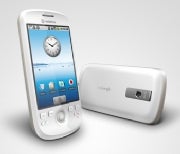
What's smaller than the iPhone and thinner than the G1? It's T-Mobile's second Android-powered phone: myTouch 3G. Or at least that's the rumor, anyway. Next week, T-Mobile is expected to announce a summer launch date for another Android-powered phone from HTC called the myTouch 3G, according to The Wall Street Journal.

The myTouch 3G will have a touchscreen but no physical keyboard, as well as a G1-styled trackball and navigation buttons. But that's where the similarities end; overall, the new Android phone will reportedly resemble the HTC Magic, currently available in the

htc magic android U.K. In fact, the myTouch 3G could simply be a renamed version of the Magic. Earlier this month, PC World's Daniel Ionescu posited this theory after all attendees of Google's I/O conference received an HTC Magic handset to take home and try out. That free giveaway seemed very generous at the time, but it makes more sense from a marketing viewpoint if the Magic is about to be released in the U.S.

The Journal says the myTouch will have a glossy look with a rounded back that is smaller than the iPhone but thinner than the original Android phone to hit the U.S -- the G1. As for new features, the myTouch 3G could come with voice-activated search and video capability.

This is the third time we've heard about a new Android phone from HTC in the coming months. Just a few weeks ago, rumors were circulating about the HTC Hero launching on June 24, with a big bash planned for London. Based on the rumors, however, the Hero and the myTouch don't sound like the same phone. The Hero is rumored to be coming to AT&T and would also be a touchscreen-only device. A second Hero model may also be in the works, possibly renamed the Lancaster or Memphis, that would come with a keyboard. The Hero is supposed to use HTC's TouchFlo 3D user interface, but there's no word on whether the myTouch would use TouchFlo as well. We've also seen reports about a refreshed G1 coming to T-Mobile called the G2, which could be the same phone as the myTouch 3G.

Google has been saying for some time to expect numerous Android models to hit the U.S. market. The Journal said the search giant is looking forward to seeing around 18 different models this year. Despite these announcements and predictions, so far only the G1 has appeared in the U.S.

But here are some other signs that a new Android model could be hitting store shelves soon. The myTouch 3G is rumored to have a $179.99 price tag with a two-year contract. That's the same price as the G1 -- or at least it was. T-Mobile recently slashed the price of the G1 by $30 to $149.99. Is this a sign that a new Google phone is about to hit the market? I guess we'll have to wait until next week to find out.

Monday, June 15, 2009

Conficker Predictions - Doomsday Scenarios for April 1

conficker worm spells doom, or does it?Graphic: Diego Aguirre
Doomsday is nearly here. Well, maybe.

The fear-inducing Conficker worm is set to explode (or something) this Wednesday, April 1. Wondering what the hell that actually means? You aren't alone.

No one knows exactly what Conficker will bring, but plenty of theories are floating around. Some take on apocalyptic tones, while others seem more like nonchalant groans. Before you unplug your computer and brace yourself in the fetal position, though, consider some of the possibilities and how likely they appear to be.

1. It'll be Y2K all over again.

Just picture it: Computers worldwide simultaneously freak out. Banks go haywire, airports shut down... -- oh, wait a minute. None of that stuff ever happened.

That's exactly what a lot of security experts are expecting to see this week: a collective sigh of relief as all the hype turns into a big fat punchline, ripe for months of late night comedy milking.

"The truth is, there will be no April 1st outbreak, despite what some of the press stories have said so far," says Joe Stewart, director of malware research with SecureWorks.

"The probability of a major [Conficker]-related event taking place on April 1 is really not very likely," agrees Vincent Weafer, vice president of Symantec's security response group.

Armageddon? Fuh-get-it.

2. Hackers will take over the world.

On the other end of the spectrum, some are suggesting that the worst could actually occur. Just look at these sentiments from a not-at-all sensational story by U.K. tabloid The Sun (and yes, these are all unmodified, direct quotes):

• "Millions of computers around the world could go into meltdown."

• "The aggressive bug could be hiding on your PC at home right now, waiting to kick in."

• "For the hackers, it's like having a virtual army at their fingertips."

• "They could also plunder information, including your bank details."

Meltdown? Hiding in my home? Army? Plunder?! That fetal position is starting to look more appealing.

But really, most people who study security for a living say this extreme type of scenario seems awfully unlikely. What's more, research released just today by IBM Internet Security System's X-Force (note to self: rename bowling team "The X-Force") suggests Conficker's presence in the U.S. has been greatly exaggerated. Fewer than 6 percent of Conficker infections are in North America, IBM says. The majority are in Asia, followed by Europe and then South America.

The smartest thing you can do right now is to check if you're infected -- and, if you are, run a removal tool to make the fix before midnight.

3. Every infected computer will lose all of its data.

The Conficker event scheduled for April 1 could contain code telling the bug to wipe out the hard drives of every personal computer in sight. Key word there: could.

The truth, as PC World's Erik Larkin points out, is that the folks behind malware are typically looking to make some sort of measurable gain. As valuable as your photo collection from last year's family vacation is (and yes, I know about the bikini pics), odds are, it's not what a hacker is after.

4. Spam, spam. Lots of spam.

One way that gain could be accomplished is through spam -- and lots of it. With millions of machines believed to be affected worldwide, Wednesday's potential communication expansion could give Conficker's creators the power to blast us with bundles of annoying new e-mails. That threat, some say, could be very real, as could the idea of targeted denial-of-service (DoS) attacks.

Still, any DoS attacks would more likely be aimed at corporate networks, not individual users, and many major institutions have already taken steps to protect themselves.

5. Jerry Yang will suddenly become an omnipotent force, ruling the entire world from a top-secret Silicon Valley bunker.

Hey, I'm just saying -- anything's possible here. And of all the scenarios we've considered, this final one may be the most troubling. I mean, what anti-virus program could possibly protect us from that frightful fate?

Fetal position, here I come. I'll be under my desk if anyone needs me.


Tuesday, June 9, 2009

Spoil Your Kid With A Child-Resistant Laptop


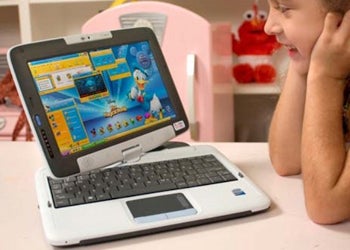
If you don't want you child messing around with your precious new computer, then you might want to look into this: PeeWee PC introduced a splash-resistant tablet PC that comes with all the adequate perks to keep your kid entertained and browse the Internet safely.

Coming in at $600, the PeeWee Pivot Tablet Laptop features a 10-inch touch screen and is powered by a 1.6-GHz Atom processor and 1GB of RAM memory, which can be upgraded to 2GB. With a 60GB hard drive, the PeeWee PC runs Windows XP, which might leave your child in a tantrum if they get stuck with some 'blue screens of death'.

The PeeWee PC is not light on additional specs either. The convertible tablet laptop has two USB 2.0 ports, a VGA port, an SD/MMC media card reader, Wi-Fi (802.11b/g) and a 1.3-megapixel webcam to fulfill you child's needs of doing anything more than drawing on a very expensive version of their paper notebook.

On the software side, PeeWee PC ships with games designed for kids ranging from pre-K to upper elementary students and a Walt Disney theme for Windows XP. In addition, it includes a specially designed security suite that allows parents to control when and how kids use the PeeWee PC. Additionally, this proprietary suite can let parents block certain Web sites, view browsing histories, and remotely control the system.

In terms of design, the PeeWee PC is quite versatile, as it can take the shape of a regular laptop or it can convert to a tablet (takes longer for your kid to get bored with it). To handle any strain or spillage, the laptop is ruggedized and the keyboard is water-resistant. PeeWee PC also has a handle at the top for easier carrying and holding and comes with a 6-cell battery pack.

PeeWee PC is available only from the manufacturer's Web site at the moment, but as an extra perk, when you spill $600 for it, your kid gets his age, name and interest custom built laptop (via the software on board).

Is it worth it? You can get a similar specifications laptop on the market right now even cheaper that PeeWee PC's retail price, but the additional cost could be covered by the ten age-targeted software titles that come with it and the durability this laptop was built in mind with (due to children's usage). I just wish I had one of these when I was a child.

Sunday, June 7, 2009

latest iphone 30 beta reveals parental

Developers got an unexpected surprise yesterday after Apple released a new beta of the iPhone OS 3.0 and a second version of iTunes 8.2. This release comes just eight days after Apple released 3.0 beta 4 and the first public version of iTunes 8.2. Apple's typical release schedule for new 3.0 beta versions has been about two weeks. If beta 5's availability signals a faster release schedule, then a near-final version of iPhone OS 3.0 may be just around the corner. That would make sense since it's barely over a month until Apple's annual Worldwide Developers Conference in San Francisco where 3.0 is expected to make its debut.

Nothing has been found in yesterday's release as dramatic as last week's hints that Blu-ray functionality may be coming to iTunes 8.2. However, there are some notable additions in this latest version of iPhone OS 3.0. The biggest change is that iPhone apps may be getting restriction settings with parental controls built into the iPhone. Apple has been criticized for its heavy censorship restrictions having rejected iPhone apps like Nine Inch Nails' nin:access or South Park's iPhone App for containing material that some users may have found objectionable. Parental controls for iPhone apps are a great way to allow users get the content they want while keeping explicit material away from minors.

Apple has also patched a hole that allowed enterprising hackers to get a preview of iPhone's upcoming multimedia messaging service; Apple hasn't turned on the iPhone's MMS functionality yet. AT&T users with beta 5 will now find that MMS buttons are hidden. Another hack that allowed you to enable tethering on the iPhone has also been shut down. There are also reports that YouTube streams over 3G now have higher resolution than before. Somewhere between beta 4 and 5, 3.0 also picked up a minor bug without a current fix; Apple has warned that a small number of AT&T customers may lose their 3G data service after they've installed beta 5.

This year's WWDC runs from June 8-12 at San Francisco's Moscone Center West. For the second time in its history WWDC has sold out; the first time was last year when the iPhone 3G debuted. Apple's official line is that WWDC 09 will be about Snow Leopard, the latest version of OSX, and iPhone OS 3.0. Regardless, some are speculating that fancy new Apple hardware could debut in June including a new iPhone and Apple's oft-rumored tablet device.

Wednesday, June 3, 2009

Android Gets Updated to Version 1.5

The long-expected update to the Android operating system, version 1.5, has arrived. T-Mobile will be rolling out the new OS to existing G1 phones starting sometime next week. While you wait for your share of the software upgrade, take heart: There's plenty to be excited about in the 1.5 release.

The final release of the Android 1.5 OS, previously known as "Cupcake", finally brings an on-screen virtual keyboard with vibration feedback, plus video recording, playback, and sharing via YouTube. T-Mobile is expected to roll out this update to all its G1 customers by the end of the month.

Cupcake also brings many user interface refinements, along with accelerometer-based application rotations. The home screen now features widgets as well; some of the pre-bundled ones include a calendar, an analog clock, music player, and search (with improved voice search).

android video sharing

Video captured with the G1's camera can now easily be shared via YouTube.

G1's browser is up for a treat also, with new copy and paste, search within a page, tabbed bookmarks, and history features. Wireless music fans will appreciate their G1 even more with A2DP stereo Bluetooth support (iPhone users -- hang on, you're getting this in 3.0 also) while auto-pairing was added with an improved hands-free experience.

Gmail on the G1 gets upgraded with batch editing functionality for archives, labels, and deleting. The contacts app will now show user pictures for your favorites and specific date and time stamps for events in the call log.

Google has put up a presentation video (below) of the Android 1.5 release. It's worth noting that the engineer showcases the new Android 1.5 features on the G2 (HTC Magic), which is available only in Europe at the moment on Vodafone. The European G2 doesn't have a physical keyboard and comes with a 3.2-megapixel camera (same as the G1).

With the Android 1.5 release, Google has caught up with the features expected to come from its main rivals this summer -- the iPhone 3.0 update and Palm's WebOS. All in all, it's nice to see that Google approached the same strategy as Apple when it comes to upgrading a phone's features without making the hardware obsolete (unlike, ahem, Nokia).