However, laboratory tested speeds don't always work out as advertised when used in everyday scenarios. Nevertheless, in an e-mail interview Michael Foley, executive director of the Bluetooth SIG, stands behind the speed claims adding that the average user will experience transfer rates between 22-26 Mbps with 3.0. This is a great advantage for devices that use an ad hoc connection, because it means you can transfer data between two devices at high speed without using a USB cable or logging on to a Wi-Fi network.
Other new and notable Bluetooth features include Unicast Connectionless Data giving 3.0 devices improved responsiveness and noticeably better battery life; and Enhanced Power Control which reduces the incidence of disconnects caused by movement such as placing a phone in pocket or purse.
From its All-Hands Meeting in Tokyo today, the Bluetooth SIG said manufacturers Atheros, Broadcom and CSR are already shipping 3.0 computer chips to device manufacturers and 3.0-enabled gadgets should be on store shelves within the next 9-12 months. There's no word yet on what devices will be the first to benefit from the faster Bluetooth speeds. But Foley says he's seen interest from computer and cellular phone makers, and even Television manufacturers.
While it's pretty much a given that computers and mobile phones will employ the new standard, TV makers are not a part of the typical Bluetooth crowd making it interesting to see if any TV makers adopt Bluetooth into their sets. If they did, it wouldn't be the first time TV makers had flirted with Bluetooth. As recently as last summer, LG Electronics announced its 7000-series of LCD and Plasma televisions would let you use wireless headphones via Bluetooth. Wireless headphones are one of the more common uses for Bluetooth, but with the faster transfer rates television manufacturers may find more interesting uses for 3.0.
With faster speeds, Bluetooth 3.0 promises to help increase adoption among users and manufacturers; however 3.0 also faces competition from an emerging short-range standard: Wireless USB. Using ultrawideband (UWB) technology, Wireless USB claims blazing fast speeds of up to 480Mbps between two devices within ten feet of each other.
Yet there is a possibility that Bluetooth could adopt UWB since the technology's guardian, the WiMedia Alliance, last month transferred the specifications for the UWB radio to the Bluetooth SIG and the Wireless USB Promoter Group. "Should UWB prove viable," Foley said. "It could be considered for a version of Bluetooth technology down the road, but at this point it's too early to tell."
For the moment, Bluetooth has staked its future on the more familiar 802.11 protocol, and you can be sure that PC World will put Foley's speed claims to the test once 3.0 devices become available.






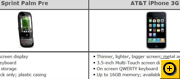





 Word on the street is that AT&T is finally preparing to add a new (but previously announced) pricing option for the iPhone 3G that does not require committing to a two-year data plan, or activating on site. But the offering (as outlined in a supposedly leaked presentation on Boy Genius Report) is so expensive--$599 for the 8GB model and $699 for the 16GB model--and so loaded with restrictions that it's hard to see who'd benefit from the deal, which supposedly will be offered starting March 26.

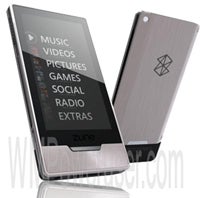 Source: WMPoweruser