Tuesday, August 18, 2009

Palm Releases First Update to webOS

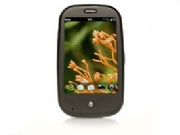
While it boasts no new apps, Version 1.0.3 of Palm Pre's Web OS features a myriad of little updates, including enhanced e-mail support and faster Google synching. Palm touts "synergy" as one of Web OS's important elements, so it's not surprising that many of the updates focus on quicker and easier synchronization with Google.

Google calendar events with symbols or accents in the name can now synchronize ("Lunch@1:30 w/Marie-Élise" is no longer a problem), and the sync interval for both events and contacts has been decreased from every few hours to every 15 minutes. Palm also promises better e-mail performance in areas where wireless coverage has been spotty, as well as support for Non-SSL Exchange ActiveSync (EAS) mail servers.

As far as the little tweaks go, Palm has fixed an alarm clock glitch, which caused alarms to go off on weekends, even if they were set for "weekday only." Version 1.0.3 also includes various other updates to e-mail, phone, and other apps.

So, Pre-owner: Download 1.0.3 now, and make some late-afternoon weekend plans with foreign friends.

Wednesday, August 5, 2009

T-Mobile Launches Dash 3G

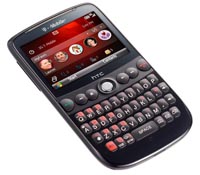
t-mobile dash 3gT-Mobile today introduced the T-Mobile Dash 3G, a long-awaited refresh of its predecessor, which we first reviewed more than two years ago. The Dash 3G joins this summer's hot parade of new cell phones, which began earlier this month with the launch of the Palm Pre and continues this week with the launch of the Apple iPhone 3G S and next week's launch of the second T-Mobile phone with Android. The Dash 3G will go on sale in stores in July.

The new Dash 3G is similar to the HTC Snap (available on Sprint and Verizon). It is the first 3G phone from T-Mobile to use the Microsoft Windows Mobile 6.1 Standard Edition operating system. The handset has evolved from its previous iteration to look sleeker and more smoothly designed. It replaces the previous model's five-way nav button and cluster of small nav keys beneath the display with a trackball and clearly defined, round nav buttons. The QWERTY keyboard appears roomy as well.

More details, including price, to come when available. What is known is that the Dash 3G has a QVGA (320 by 240 pixel resolution) display, integrated GPS, Exchange server support, microSDHC card slot, Bluetooth 2.0, and a 2-megapixel camera. These features are a boost over the previous version, but fall short of some of the beefier specs of phones like the Palm Pre or the iPhone 3G.

Monday, July 27, 2009

Verizon, AT&T: Buy a Texting Plan and We Won’t Rip You Off

Artwork: Chip Taylor
If you're not buying a monthly text-message plan from your wireless carrier, you're getting ripped off. This isn't news, I know, but testimony before Congress this week from the nation's top wireless carriers makes this clear to occasional texters like me who don't want a message bundle.

Representatives from Verizon Wireless and AT&T appeared before the Senate Judiciary Committee's antitrust subcommittee in Washington on Tuesday to address allegations that U.S. wireless carriers are colluding to set prices for text messaging.

The collusion claims have been brewing for months now, and for good reason. The nation's top four cellular providers -- AT&T, Sprint, T-Mobile, and Verizon Wireless -- each charge 20 cents per text message, a rate that's doubled from 10 cents in 2006. However, only users with a pay-per-use (PPU) plan for texting face those steep rates.

Highway robbery? You bet. But apparently the PPU deal is for suckers only. Um, like me.

I did a quick comparison of the lowest-priced text message plans from the four major carriers. They are:

* AT&T: 200 messages for $5 a month (2.5 cents per message)
* Sprint: 300 messages for $5 a month (1.67 cents)
* T-Mobile: 300 messages for $5 a month (1.67 cents)
* Verizon: 250 messages for $5 a month (2 cents)

These estimates assume you're texting up to the monthly limit, of course, which probably isn't the case all the time. But even if you use half your allotted texts, you're still paying a small fraction of the PPU rate.

Am I cheap? Probably. But more importantly, I hate being forced to pay for services I don't want or need, such as 200 to 300 text messages a month. I send and receive maybe 10 to 15 texts a month. So is it fair that my carrier AT&T charges me eight times the bundled rate?

Yes, I know we're talking a few bucks here. So call me cheap. I'm arguing on principle.

According to a prepared statement by AT&T general counsel Wayne Watts, "less than 1% of AT&T's postpaid text messaging volume is handled on a PPU basis. Instead, the vast majority of our customers take advantage of AT&T's multiple messaging pricing plans, including those that provide a package of messages for a flat monthly rate."

So not only am I a sucker, I may be the only one.

Watts also points out that U.S. wireless carriers are "competing fiercely on many levels," and offer consumers a variety of voice and messaging plans. When it comes to texting fees, there's no collusion at all, he claims.

Damn. I just got a text message. Another 20 cents down the drain.
True? It's hard to say. The universal adoption of the 20-cent-per-message fee by the Big Four does look suspicious. Then again, when you've got numerous vendors duking it out in a highly competitive wireless market, collusion seems a lot less likely
Thursday, July 16, 2009

Asus and Disney Join Forces on Kid-Friendly Netbooks

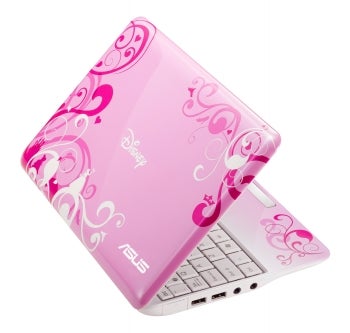
Add this to the list of unexpected business partnerships: Asus and Disney have combined their expertise in computers and cartoons to produce a Disney-themed netbook called the Netpal. Available in "Princess Pink" or "Magic Blue," the Netpal will be available in late July.

The Netpal should be perfect for the Disney fans who need a laptop that packs a little more punch than the $30 Vtech Disney Princess Carriage "Laptop" and just aren't feeling the Snow White look of the older Lenovo IdeaPad Y330 Disney Limited Edition.

The Netpal will be sold by Toys ‘R' Us, DisneyStore.com, and Amazon.com for $350, which will get you a 2.6-pound laptop with 1GB of RAM, Windows XP Home, an 8.9-inch display (1024-by-600 resolution), and a 1.6GHz Intel N270 processor.

There will be two models available: one with a 160GB HDD, and one with a 16GB SSD (the latter will be about half a pound lighter), and both will come with SD/MMC card readers, a 3-megapixel camera, a VGA port, and three USB ports.

The Netpal also comes with a handful of preinstalled themes inspired by Disney and Disney/Pixar movies, including Cars and Vintage Mickey Mouse (as well as Hannah Montana and Jonas Brothers themes for the more-mature Disney fan). There's also plenty of Disney-specific software that comes with the Netpal, so if you're having a hard time finding Hannah Montana on Pandora, you might have better luck with Disney Radio.

For parents who balk at buying a $350 PC for children on a toy-breaking streak, the Netpal's design may give them some peace of mind: it packs a spill-proof keyboard and is protected against data loss from impact by Asus ShockShield technology.

It also has plenty of parental control options; parents can restrict their children's access to particular sites or programs, limit e-mail correspondence to certain addresses, set different permissions corresponding to different scheduled times (sorry, Junior -- no Internet after 8 p.m.), and even provide statistics on what users are doing online. You can also figure out how much time the kids are spending playing Flash games when they're supposed to be studying.

Friday, July 10, 2009

iPhone Owners, Beware! (Of Iffy iPhone Studies)

iPhone Owners, Beware! (Of Questionable iPhone Studies)BREAKING NEWS: Your Apple iPhone is bound to break! At least, if you believe a new study by an electronics warranty company that, by pure coincidence, happens to be promoting an iPhone warranty plan on its home page right now. Breaking news? Broken news might be more like it, as far as I'm concerned.

The report, conducted by warranty seller SquareTrade, made its way into the blogosphere this week and has been steadily building buzz on Twitter ever since. It claims that Apple's iPhone is "prone to accidental damage," seemingly implying (though never directly asserting) that the iPhone may be more likely to break than its smartphone competitors.

Don't fall for the attention-grabbing headline, though: There's far more to this "resea
rch" than meets the eye.

When iPhones Fail

The SquareTrade study (PDF) starts, soundly enough, by comparing the iPhone 3G to the BlackBerry and the Palm Treo. The company claims that, over a 22-month period, the iPhones it tracked experienced far fewer hardware failures than the other mobile devices. Only 9.9 percent of iPhones malfunctioned during that initial two-year timeframe, SquareTrade says, while 15.3 percent of BlackBerrys and nearly 20 percent of Palm Treos had hardware issues.

That sets the stage for the remainder of the sales pitch -- er, sorry...study. Brace yourself.

When iPhone Research Fails

SquareTrade goes on to claim that "while the iPhone hardware experienced relatively few malfunctions, the real problem with iPhones [are their] susceptibility to failures from accidents." More than 20 percent of all iPhone users, the company says, experience some sort of accidental damage to their device -- leading to a "projection" of any iPhone owner having a 33 percent chance that their device will die within two years of its purchase.

Oddly, the comparisons to other devices end here; SquareTrade doesn't actually ever say how the BlackBerry or Palm Treo fared when it came to "susceptibility to failures from accidents." Sure, the iPhone is "especially susceptible to dying from drops, whether on hard surfaces or into liquids" -- but is it any more so than any other small, sleek electronic device with a glass screen? Could other phones be dropped or watered without incident?

This omission, I'm sure, has nothing with to do with the fact that the iPhone is the only smartphone prominently featured on SquareTrade's home page for warranty sales. It also, I'd imagine, has no relation to the following highly scientific conclusion of the company's "research":

"As the cost to replace iPhones is high, prospective iPhone owners should consider this potentially hidden cost before they buy, or seek other ways to alleviate the cost of replacement, such as buying an extended warranty that covers drops and water immersion."

SquareTrade, according to its home page, is the only company offering an iPhone warranty that covers handling-related accidents. You know, things like drops and water immersion.

Tuesday, June 30, 2009

Intel and Nokia to Rattle Mobile Landscape

Intel and Nokia to Rattle Mobile LandscapePlenty of questions linger regarding Intel and Nokia's partnership, but one thing we can count on is the two powerful tech players will rattle the mobile landscape. The Intel and Nokia partnership, announced yesterday, was slim on specifics but brimming with potential as both announced they would collaborate on a mobile-computing partnership.

The duo has the very real potential to shower consumers with dozens of shiny new Nokia and Intel products from super-smart smartphones that transmit voice and data at lightning speed and efficiency or something like a hybrid netbook/notebook that fits in your shirt pocket.

We will have to wait and see what becomes of the partnership because both executives from Intel and Nokia were mum on what type of gizmos we will be seeing and when. While the brunt of the announcement focused on explaining how both would deliver a new mobile platform, such as Mobile Internet Devices (MIDs), it's what was not said that may generate the most interest and should have Apple, AMD, and other mobile players interested.

Intel Partners Scratch Heads

While Intel and Nokia skimped on specifics, left dangling in the wind are questions about how this announcement will impact Intel's relationships with other companies it has longstanding relationships with. For example, Intel has made significant inroads with Apple, where many of its Macintosh computers are based upon Intel CPUs - will an Intel powered Nokia iPhone competitor strain Apple's relationship with Intel? Concerns should also surround Intel's relationship with Microsoft - will an Intel powered Nokia MID running Android or Linux impact Microsoft's sales of Windows Mobile?

Nokia, Intel Marriage: Jealous?

One thing is certain: Intel may be taking a big risk with its dive into the mobile wireless device market with Nokia. Intel has to be careful not to upset its current partners, yet still work with Nokia to deliver new and impressive devices to consumers. Perhaps, the biggest winner here will be AMD, which has already made inroads with Gateway into the netbook market and is poised to challenge Intel in the low cost computing arena.

If They Were Smart . . .

Still more questions remain about WiMax and alternative operating systems (Android and Linux). The smart move for both companies would be to quickly introduce a MID that shouts innovation. That innovation could come in the form of integrating WiMax into an Android based tablet, which can switch between various wireless modes, while providing the features of a Kindle and iPhone combined, add Bluetooth for a headset and viola, the companies would have something that could compete against netbooks, Kindles and iPods.

Together Intel and Nokia have the technology to make this happen. Nokia has already unsuccessfully dabbled with tablets and Intel already has experimented with cellular phone technology, so both companies have the background to make something happen quickly, and to become masters of the wireless market. Unfortunately, both companies may have to tick off some of their existing partners, at least a little, to seize the day and make this new relationship deliver something significant.

Is a $99 Palm 'Eos' in the Works to Challenge Apple?

Here's a blurry rendering of the Palm Eos from the guys over at Engadget
The Palm Pre may have just debuted at $199 (after rebate), but a cheaper, smaller Palm smartphone may be just around the corner. According to Mike Abramsky, an analyst for RBC Capital Markets, Palm will launch its $99 Pixie -- or perhaps it'll be named the Eos -- as early as Q4 2009.

Rumors of the Pixie/EOS have been circulating for months, and some reports predict the phone will resemble the popular Palm Centro with a touchscreen and a physical keyboard. A shrunken version of the Pre is unlikely, however, without some major design changes. In her review of the Pre, PC World's Ginny Miles praised the phone's interface and touchscreen, but was less than thrilled with its physical keyboard:

"Unfortunately, Palm seems to have sacrificed keyboard usability in the interest of compactness. While I appreciated having a physical keyboard, I disliked the design . . .The keys weren't too tiny for my small hands, but some of my colleagues found them quite cramped."

Another option for a future Pre: Palm could ditch the slide-out keyboard and replace it with a touchscreen version, a la the Apple iPhone. (Today's Pre lacks a touch keyboard.) Certainly, the Pre's best feature is its webOS operating system, which Palm will likely port to other Web-enabled devices next year, Abramsky believes.

Whatever Palm has up its sleeve, it definitely needs a webOS-enabled smartphone to compete with the iPhone 3G. Aggressively priced at $99 and featuring Apple's slick iPhone 3.0 software update, the 3G is arguably the best smartphone value on the market today.

Go to jbertolucci.blogspot.com for links to Jeff Bertolucci's PC World blog posts.